




07 de January de 2026
Cambio climático y gestión de recursos naturales
Resiliencia y competitividad
Biodiversidad y paisaje
The CAP Network held the conference “Soil as an ally of agriculture in the face of the climate emergency” in Madrid, with a panel of experts and analysis on the impact of ecoregimes on soil organic carbon content and the new European Directive for healthy soils by 2050.
The CAP Network held the conference “Soil as an ally of agriculture in the face of the climate emergency” in Madrid, with a panel of experts and analysis on the impact of ecoregimes on soil organic carbon content and the new European Directive for healthy soils by 2050.
The event was hybrid, both in-person and online, and was attended by 81 people in person.
Soil is the Earth's skin, a fertile tissue that sustains life and holds the memory of every natural cycle. It tells stories of abundance and also of fragility: erosion, carbon loss, and desertification. Caring for it means ensuring food production, the health of water resources, and climate balance for future generations. With this conviction, the CAP Network organized a conference to reflect on how soil health can be the best strategy for combating climate change.
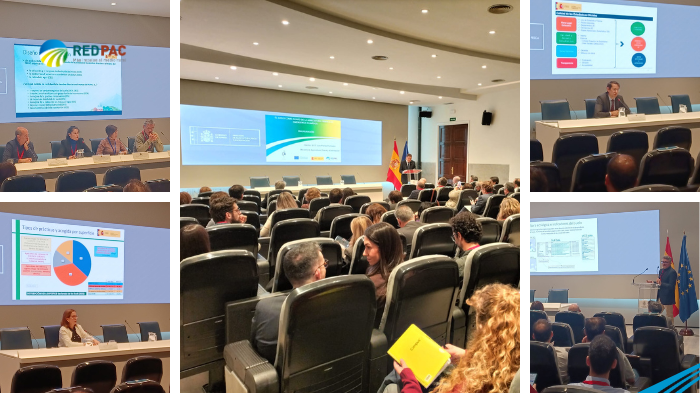
On December 5th, the CAP Network held a technical conference in Madrid - " The soil as an ally of agriculture in the face of the climate emergency" - to analyze how sustainable soil management can become a strategic ally in the face of the climate emergency, strengthening the resilience of the agricultural sector.
The hybrid event, combining in-person and virtual participation, brought together 81 attendees and garnered approximately 694 live views. Its objective was to convene representatives from the agricultural sector, researchers, and institutional institutions for a discussion on the role of soil as a living resource essential for the sustainability of agricultural activity. Indeed, the following statistic was shared during the event: 60-70% of European soils are currently degraded, with recovery costs estimated at €500,000.
During the event, data was analyzed, but innovative practices that improve fertility, reduce emissions, and promote carbon sequestration were also shared, all aligned with the CAP's eco-schemes for carbon-lowering agriculture (extensive grazing, no-till farming, and live or inert cover crops). These eco-schemes represent 23% of the CAP's budget and mobilize €1.1 billion annually to promote sustainable practices, which are also tax-exempt.
Program
The program included a roundtable discussion on the importance of organic matter, water management, and biodiversity, as well as practical experiences applied on farms. The need to promote policies that integrate soil health into agricultural planning was also highlighted.
Among the conclusions, it was emphasized that soil sustainability is not only an environmental challenge but also an opportunity to improve the profitability and competitiveness of the sector. In this regard, the Ministry of Agriculture, Fisheries and Food ( MAPA ) presented the results of the CARBO-PAC-TO project, which is advancing the measurement of soil organic carbon through sampling in 16,000 plots , a key factor in measuring organic carbon sequestration in soils at the plot level.
This initiative, a pioneering effort in Spain, measures the "carbon health" of our agricultural soils, and has already yielded its first analyses, which reveal a clear story: soils that apply sustainable practices linked to this type of ecoregime retain much more carbon, especially in woody crops and irrigated land, where up to 4.44 Mg C/ha are reached compared to less than 1 Mg C/ha in dryland herbaceous crops.
Furthermore, it was announced that the results of the evaluation of no-till farming, included in the "Carbon Agriculture and Agroecology: Rotations and No-Till" eco-scheme of the CAP (Common Agricultural Policy), will be published soon. This analysis will provide a more precise understanding of the real impact of this technique on improving soil organic carbon and reducing emissions, offering recommendations to optimize its application in different cropping systems. The CAP Network will disseminate these findings through its channels to continue promoting sustainable agricultural practices aligned with European climate objectives.
Europe is moving towards soil health: key regulations and challenges
The day also focused on the new European legislative framework: Directive (EU) 2025/2360 on soil monitoring and resilience , approved on November 12 and which came into force on December 16, 2025.
This standard establishes for the first time in Europe a comprehensive system to guarantee healthy soils by 2050, with milestones such as:
17/06/2027: indicative list of soil contaminants.
17/12/2027: creation of the European digital portal on soil health.
17/12/2030: first official soil measurements in the Member States.
17/12/2031: first soil health assessment (every 6 years).
17/12/2029: inventory of potentially contaminated land.
The Directive requires the harmonization of databases and systematic monitoring , integrating information on carbon, erosion, pollution, and biodiversity. According to experts, this digitization will be key to targeting aid, reducing degradation, and ensuring the sustainability of agricultural production.
Agreement on land for Europe
The European Union launched the mission “A Soil Deal for Europe” In 2023, the mission aimed to build an effective framework for soil protection and restoration. The main objective of the 'A Soil Deal for Europe' mission is to establish 100 living labs to lead the transition to healthier soils by 2030 and promote low-carbon agriculture. Learn more here .
All the papers and studies presented at this conference, along with their data and figures, can be found here .