




22 de July de 2026
Dinamización rural
Resiliencia y competitividad
The “We are LEADERs” meeting brings together for the first time the entire LEADER ecosystem to defend a strong rural policy in the debate on the future CAP
The “We are LEADERs” meeting brings together for the first time the entire LEADER ecosystem to defend a strong rural policy in the debate on the future CAP
Innovative experiences, territorial cooperation and recognition of three decades of work were the highlights of a day that put a face to rural development
The future “Jerez Declaration” aims to become a common voice of rural territories to defend the strategic role of LEADER in Europe
Thirty years after the arrival of the LEADER approach in Spain, those who promote rural development from the local level have sent a clear message: the future of European villages depends on strengthening rural policies and maintaining the leading role of local participation.
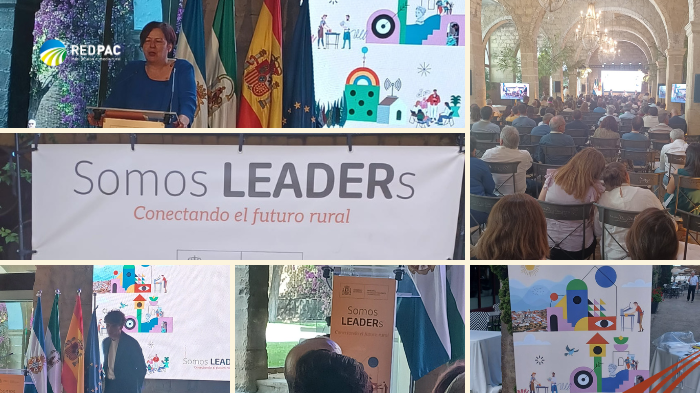
The national meeting “We are LEADERs. Connecting the rural future”, organized by the Ministry of Agriculture, Fisheries and Food ( MAPA ), and held in Jerez de la Frontera (Cádiz) on June 25, brought together local action groups ( LAGs ), regional and national networks, public administrations and European representatives to assert the value of LEADER as a key tool for territorial cohesion, innovation and entrepreneurship in rural areas.
LEADER in the face of the post-2027 CAP horizon and the new European Rural Objective
One of the debates that hovered over the meeting was the future of LEADER in the next European budgetary period 2028-2034. Although the European Commission ( EC ) has confirmed that the LEADER approach will remain mandatory in all Member States and will maintain fundamental elements such as Local Action Groups (LAGs) and the participatory "bottom-up" methodology intact, there is still no guaranteed minimum funding for its implementation.
During the meeting, the Deputy Director-General for Agriculture and Rural Development of the European Commission, Maria Gafo Gómez-Zamalloa, explained that EU negotiations are moving towards a model with greater flexibility for Member States, which raises questions about the final volume of resources allocated to LEADER from 2028 onwards.
At the same time, Gafo highlighted one of the main new developments on the table: the European Commission's proposal to establish a 10% Rural Target within the future integrated European fund. If this initiative materializes, it could mobilize around €48.6 billion for European rural areas , of which approximately €4.52 billion would correspond to Spain —a figure significantly higher than the resources currently managed through LEADER.
This scenario paints a dual picture for European rural development. On the one hand, LEADER's specific funding for the next period is not yet finalized. On the other, the incorporation of a cross-cutting rural objective could significantly expand investment capacity in rural areas. As expressed during the conference, LEADER may not yet have its financial floor secured for the 2028-2034 period, but it could have a much more ambitious ceiling than currently available.
In this context, representatives of local action groups, rural development networks, and public administrations agreed on the need to strengthen a common position to ensure that European policies continue to place rural areas at the heart of EU priorities. This is the origin of the Jerez Declaration , promoted by the LAG networks and agreed upon by the Spanish Rural Development Network ( REDR ) and the State Rural Development Network ( REDER ). The document aims to present a unified voice to Spanish administrations and European institutions in defense of a strong, participatory, and adequately funded rural development policy, reinforcing the role of local action groups as essential tools for territorial cohesion, innovation, and the creation of opportunities in rural areas.
The "Jerez Declaration" aims precisely to convey a shared voice from all LAG networks at a crucial moment for the design of the next CAP and European rural development policies.
Jerez hosts the largest LEADER ecosystem meeting held in Spain
The meeting brought together for the first time representatives of local action groups operating in Spain, along with regional officials, rural development networks and representatives of the European Commission, at a particularly relevant time for the debate on the future EU budget and the upcoming reform of the Common Agricultural Policy (CAP).
During the inauguration, the Secretary of State for Agriculture and Food, María Begoña García Bernal, argued that "there is no territorial cohesion without a strong and well-funded rural policy" and stressed that rural Spain needs a solid CAP and an ambitious rural development policy to continue generating employment, opportunities and services in the territory.
LEADER, a well-established tool for creating opportunities from the territory
One of the central messages of the day was the need to continue strengthening the LEADER method as a model of participatory governance and bottom-up development, based on the capacity of the territories themselves to design and implement their rural development strategies.
According to the data presented during the meeting, LEADER has mobilized nearly 1 billion euros in Spain during the period 2014-2022 through 253 local action groups , contributing to the creation of more than 11,900 jobs and supporting thousands of business, social and cultural initiatives spread throughout the national territory.
The day also served to reflect on the role that LEADER will have to play in the coming years in the face of challenges such as generational change, economic diversification, equal opportunities, the ecological transition and the fight against depopulation.
Projects that demonstrate the real impact of LEADER
One of the highlights of the meeting was the presentation of initiatives driven by local action groups from various autonomous communities. These included projects focused on women's entrepreneurship, promoting local products, territorial innovation, recovering rural heritage, and boosting the economy through cultural and cultural activities.
Projects such as Mentoring: Support for female entrepreneurship (Andalusia), Mallorcan sheep wool (Balearic Islands), Madrid Rural Lab (Community of Madrid), The oral library of rural memory in the Acentejo region (Canary Islands), CIVITAS (Castilla y León) or Viver de Celleristes de la Conca de Barberà (Catalonia) exemplified the diversity of initiatives that LEADER is promoting in rural Spanish territories.
A fair to connect territories and showcase achievements
The meeting was completed with a LEADER Fair in which 16 exhibitors participated —representing autonomous communities and national networks— and with a space dedicated to the presentation of projects through short presentations.
In addition, the attendees contributed to the collective construction of a “LEADER Achievements Map”, a participatory initiative designed to visualize in real time the main milestones achieved by local action groups throughout Spain.
Recognition to the people and entities that have promoted LEADER for three decades
The day concluded with the presentation of the “We Are LEADERs” awards, which recognized individuals, entities and projects that have made outstanding contributions to rural development, social innovation, territorial cooperation, female leadership or the enhancement of local resources.
The award winners include professionals, rural development groups and projects from virtually all autonomous communities, in a demonstration of the territorial and sectoral diversity that characterizes the LEADER approach in Spain.
The closing session once again focused on the future. In a context marked by European negotiations on the next CAP, the message shared by institutions, networks, and territories was unanimous: continuing to support LEADER means continuing to support communities with opportunities, innovation, and the capacity to build their own future.