



19 de May de 2026
Innovación
Cambio climático y gestión de recursos naturales
Calidad y cadena alimentaria
The BIVALVOS Operational Group is committed to the circular bioeconomy to transform mussel and clam waste into high value-added products for agriculture, food and water purification
- The BIVALVOS Operational Group is committed to the circular bioeconomy to transform mussel and clam waste into high value-added products for agriculture, food and water purification
- The project develops agricultural biostimulants, functional snacks and ceramic supports from the comprehensive valorization of by-products generated in the mussel production chain
The valorization of by-products has become one of the main lines of work within the bioeconomy . In sectors such as aquaculture and bivalve mollusc production, the use of waste allows progress towards more sustainable and efficient models capable of generating new economic opportunities from existing resources.
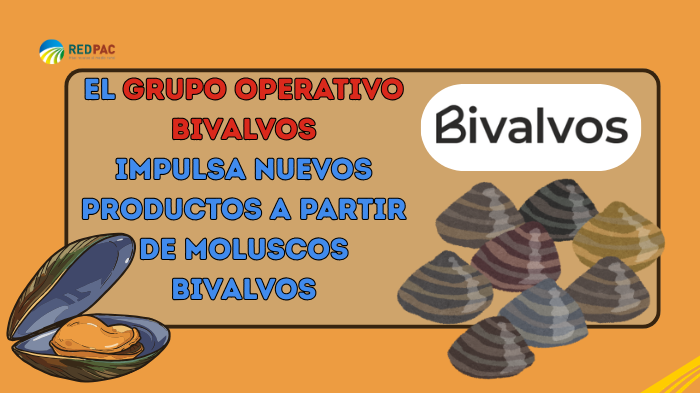
In this context, the BIVALVOS Operational Group (OG) was created , a project working on the development of sustainable processes to transform the byproducts generated during the production and purification of bivalve molluscs into new, high-value-added products . The initiative aims to create innovative solutions for the agricultural, food, and wastewater treatment sectors, reducing waste and strengthening the sector's competitiveness.
This project was present at the CAP Network event on “Bioeconomy: Success Stories and Future Perspectives” , where different innovative initiatives linked to the circular economy and the sustainability of the agricultural sector were discussed.
Goals
GO BIVALVOS works to promote a more efficient and sustainable model within the bivalve mollusc sector through the comprehensive use of waste generated during the production process. Its main objectives include:
Reduce waste generated during the production and purification of bivalve molluscs through valorization strategies.
Improve the efficiency of the production chain through new processes for classifying, selecting and treating waste.
Promote the circular bioeconomy by developing products with applications in different sectors.
To generate new economic opportunities for companies linked to aquaculture and food processing.
To promote collaboration between the fishing, aquaculture, agri-food and industrial sectors to develop innovative and sustainable solutions.
According to Henoc Pérez, principal investigator of the GO and member of INESCOP , the initiative seeks to "establish an industrial symbiosis between the fishing and aquaculture sectors and the agri-food sector" through the comprehensive use of the losses generated during the production process.
Innovation and development
One of the project's main pillars is the application of technological solutions to transform waste into new, usable resources. In this regard, GO BIVALVOS is working on several lines of research:
Development of sustainable mechanical processes to separate the shell and the organic part of the mussel.
Obtaining protein hydrolysates with a high content of free amino acids for application in agricultural biostimulants.
Design of functional food products made from mussel meat.
Research on shell micronization techniques for incorporation into ceramic and plastic materials.
Development of supports intended for water purification systems using MBBR reactors, a biological purification system based on microorganisms attached to mobile supports.
Validation of the different bioproducts under controlled conditions and real application environments.
So far, the project has achieved significant progress such as the development of a healthy snack with a shelf life of more than five months or the replacement of up to 70% of the mineral calcium carbonate in filters used in water purification systems.
Progress and expected results
The GO BIVALVOS project is currently under development and is expected to be completed in December 2026. To date, the project has already made significant progress and hopes to continue developing new applications for these byproducts.
Optimization of the separation process between the organic and inorganic fractions of bivalve molluscs.
Development of an agricultural biostimulant based on free amino acids from protein hydrolysates.
Production of a functional food product with a shelf life of more than five months.
Replacement of up to 70% of mineral calcium carbonate with biocarbonate from mollusk shells.
Development and validation of ceramic and plastic supports for water purification systems.
Improving productive efficiency and reducing waste within the sector's value chain.
According to Henoc Pérez, the experience within the GO “has been very positive, as the entire consortium has worked very well, complementing each other and resolving all the unforeseen issues that have arisen.” He also emphasized that they hope “to continue collaborating on new projects that promote innovation and sustainability in the agricultural sector.”
Participants and funding
The GO BIVALVOS event is coordinated by INESCOP and includes the participation of:
The project has a total budget of 613,256 euros, co-financed 80% by the European Agricultural Fund for Rural Development (EAFRD) and by the Ministry of Agriculture, Fisheries and Food (MAPA) .